Booking options
£242
+ VAT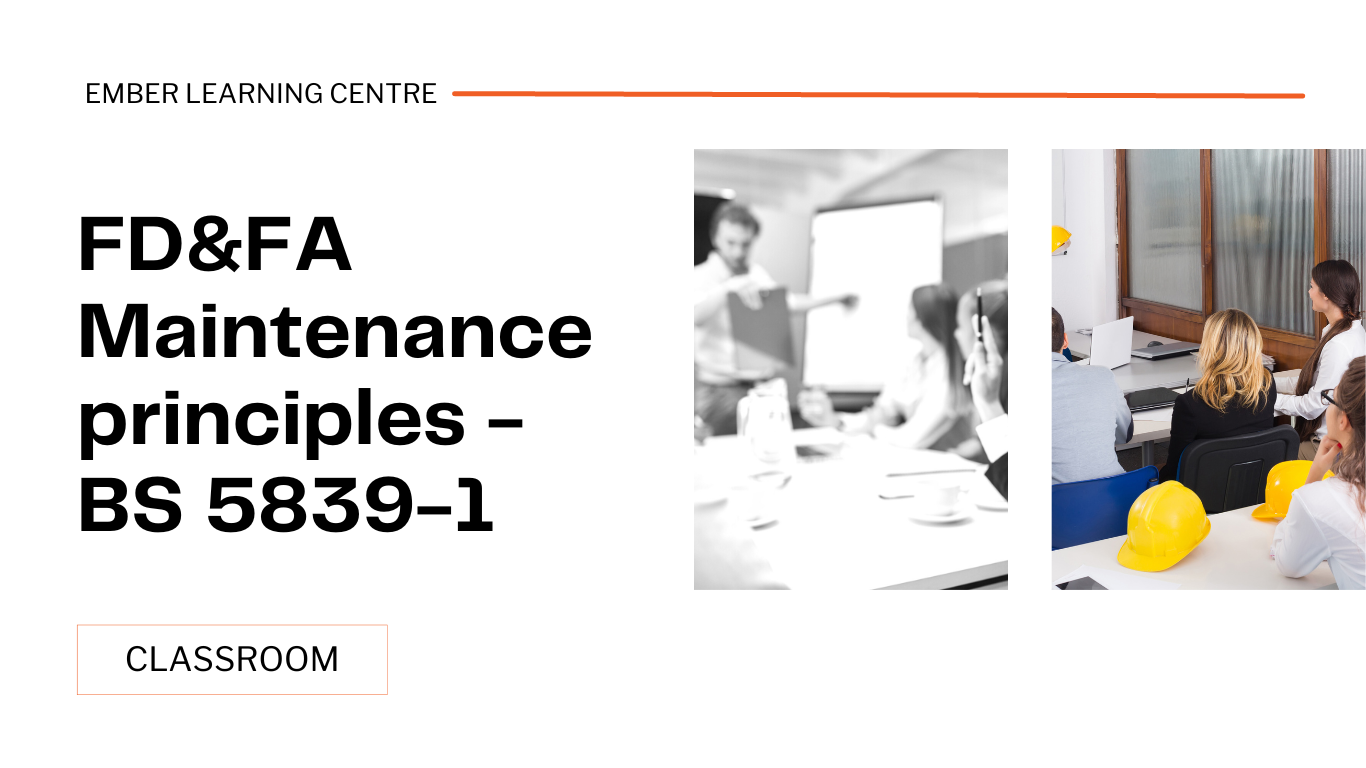
£242
+ VATClassroom
CPD Course
Intermediate
A system isn’t safe just because it worked when it was installed.
Ongoing maintenance is what ensures fire detection and alarm systems continue to perform as intended - and remain compliant over time.
This course focuses on how to maintain FD&FA systems properly, identify issues early, and deal with non-conformities before they become real risks.
Course description
This course builds on the knowledge gained in the earlier BS 5839-1 modules or equivalent industry experience, focusing on the inspection, servicing, and ongoing maintenance of FD&FA systems in line with BS 5839-1.
It explores the maintenance process, including how to assess existing systems, carry out routine servicing, and manage non-conformities.
You’ll develop a clear understanding of how to maintain system performance, ensure compliance, and support long-term fire safety.
This is Module 5 of our five-part BS 5839-1 learning pathway, completing the technical training required before progressing to the RQF Level 3 Award in the Requirements of Fire Detection & Fire Alarm Systems (BS 5839-1:2025).
Who this course is for?
Ideal for those responsible for keeping systems compliant and performing correctly long after installation.
Fire & security engineers carrying out system maintenance
Service and maintenance technicians responsible for ongoing compliance
Supervisors and managers overseeing maintenance activities
Those responsible for inspection, servicing, and system performance
Anyone progressing from earlier modules or with relevant experience
What you’ll get from this course
Clear understanding of maintenance requirements under BS 5839-1
Practical knowledge of inspection and servicing processes
Confidence in identifying and managing non-conformities
Insight into maintaining compliance over the lifecycle of a system
After this course, you’ll be able to
Maintain FD&FA systems in line with BS 5839-1
Carry out routine inspection and servicing effectively
Identify and address non-conformities in existing systems
Support ongoing compliance and system performance over time
Course Content
BS 5839-1:2025 overview
Section 2 – Design
Section 3 – False alarms
Section 6 – Maintenance
Standby battery calculations
Service review (non-conformities)
Assessment
At Ember Compliance, we're committed to helping fire and security professionals develop the knowledge, skills and confidence needed to work safely and competently.
Our courses are delivered by experienced industry professionals who combine technical expertise with practical, real-world experience. Whether you're new to the industry or looking to expand your knowledge, our training is designed to be engaging, informative and directly applicable to your day-to-day role.
We offer a range of classroom and live online courses, with many leading to nationally recognised RQF qualifications. Our focus is on supporting ongoing competence and professional development, helping technicians and businesses meet industry standards and best practice.
This depends on the course you are booking.
Many of our courses are suitable for learners who are new to the subject, while others are designed for experienced fire and security technicians or have specific prerequisites.
Please check the course description and any entry requirements before booking. If you're unsure whether a course is right for you, we're always happy to help you choose the most appropriate option.
Yes. Many of our courses are available as both classroom and live online training, giving you the flexibility to learn in the way that best suits you.
If an online version of this course is available, you'll find it listed alongside the classroom option on our website.
Absolutely.
Our trainers encourage questions and discussion throughout every course, helping learners understand how the requirements apply in real-world situations. Whether you're looking for clarification on a technical topic or practical guidance based on your own experience, we're here to help.
Yes.
Tea, coffee and refreshments are available throughout the day for all classroom learners.
For full-day courses, a complimentary lunch is also provided. Before your training date, we'll contact you to ask about any dietary requirements or allergies to ensure suitable catering is arranged.
Training is an important part of demonstrating competence, but attending a course alone does not make an individual or organisation compliant.
Compliance depends on a range of factors, including appropriate qualifications, experience, competence, company procedures and ongoing professional development.
Our courses are designed to help learners understand current requirements and apply industry best practice with confidence.
Each course is based on the current edition of the relevant British Standard, legislation or industry guidance, as detailed in the course description.
Where standards are updated, we regularly review and update our training materials to reflect the latest requirements and industry best practice.
There is no single answer, as it depends on your role and the subjects you work with.
Many technicians choose to refresh their knowledge whenever standards are updated, legislation changes or new technologies emerge. Regular CPD also helps maintain confidence and supports continued professional competence.
At Ember Compliance, we believe training should do more than simply help learners attend a course or pass an assessment.
Our aim is to support long-term professional competence by providing practical, relevant training that helps technicians apply their knowledge with confidence and continue developing throughout their careers.