
- Professional Development
- Medicine & Nursing
- Arts & Crafts
- Health & Wellbeing
- Personal Development
Communication Strategies 1 Day Workshop in Sheffield
By Mangates
Communication Strategies 1 Day Workshop in Sheffield

Negotiation Skills - Professional 1 Day Workshop in Sheffield
By Mangates
Negotiation Skills - Professional 1 Day Workshop in Sheffield

The Central Heating Controls Wiring and Fault Finding course is a two day-day short course aimed at anyone involved in the construction, commissioning, inspection & testing or maintenance of central heating electrical control systems. The Central Heating Controls Wiring and Fault Finding course covers all the commonly used control systems in use today and is focused on the ‘practical’ construction and commissioning along with the relevant fault finding techniques. The Central Heating Controls Wiring and Fault Finding course requires an understanding of electrical principles and cable termination skills. A requirement of this course is the successful completion of their Essential Electrics examination prior to sitting the central heating controls wiring & fault finding examinations. Please ring if clarification is needed on this point. There are two 20 minute open book examinations and the associated practical assessments. A third examination and associated assessment will be required for candidates not holding the Essential Electrics unit. The Central Heating Controls Wiring and Fault Finding course comprises of: Short theory sessions introducing the conventional wiring systems, ‘Y’ Plan, ‘S’ Plan, ‘C’ Plan, Etc. Detailed practical workshop sessions, undertaking the construction, testing and commissioning of systems Fault finding and maintenance tasks performed on working systems Examination and practical assessment preparation ready for the assessments Evaluation of the system control function (why and how it works) Each student will work on their own system, and will have plenty of time to absorb and understand how each systemworks. Advise will be given on suitable ‘tooling’ and test equipment. These are nationally recognizable qualifications which are fast becoming an essential requirement for this type of work. The course costs include comprehensive course notes and examination entry fees.

What does this course cover? This five-day course covers a range of topics, all of which are covered via a mixture of theoretical and practical training – we aim for our courses to be as hands-on as possible. The course specifically covers: An introduction to SCADA systems, including elements, servers, hardware and software, tags, plus more. A range of systems including automatic control, FIELDBUS, and wireless communication systems. An introduction to serial interferences, ethernet networks, fibre optics, and wireless. Process variables Communications include case studies to establish communication with HMI (Siemens, Allen Bradley, and Pro-face) . Programmable Logic Controllers (PLCs), Remote Terminal Units (RTUs), sensors and alarms. Introduction to OPC, covering how to configure OPC UA servers and how to program an OPC UA client. Client and servers development Connection management Security configuration Trends and historical data System components What will I gain from this SCADA HMI course? Upon successful completion of this course, candidates will gain a City & Guilds accredited certificate in Scada, HMI and communications.
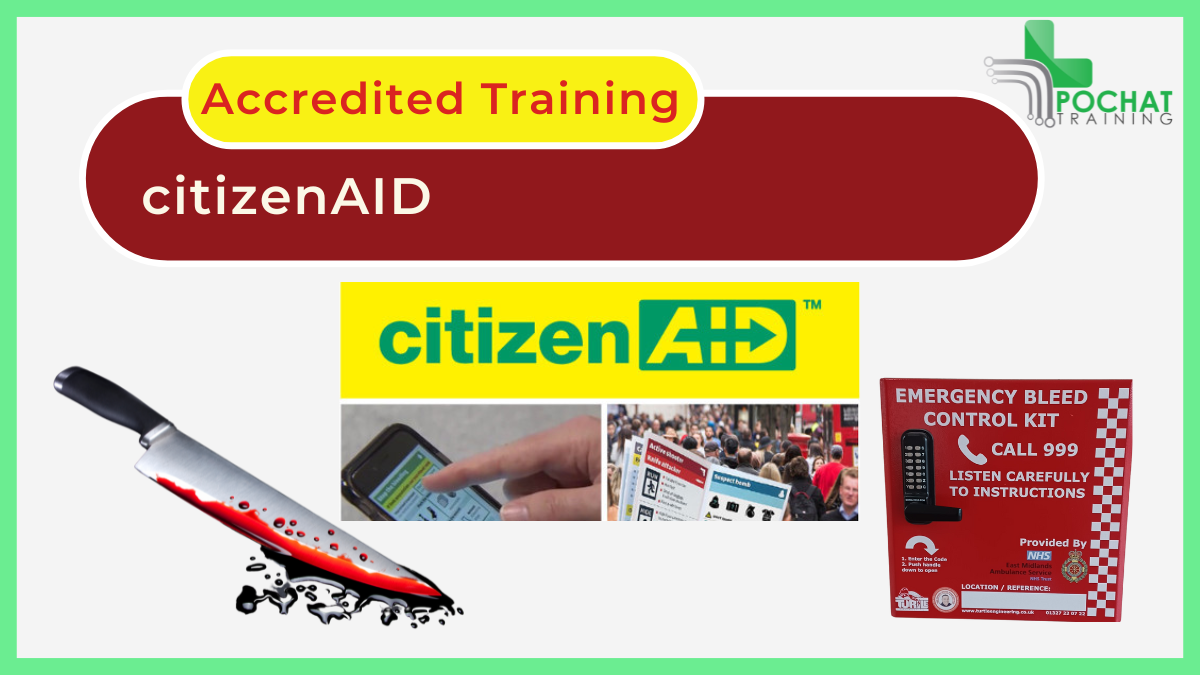
This QA Level 2 Award in citizenAID (RQF) course is a half-day course to teach the skills and knowledge needed in case one finds themselves in the middle of a terrorist attack. The skills are also usable in any event where there might be either multiple or severely injured people. Past attendees said: Attended the citizen aid course this week, absolutely brilliant. Whilst we all hope that we are never involved in a major incident, the big question though would be are we prepared, what would we do? This course discusses various incidents and some are uncomfortable to think about, but if something happened most people panic, after this course you are likely to stay calm, take control and above all save lives. This course is for everyone due to the current threats in the world, However large companies especially should consider training their staff, it may save your life or someone close to you. Highly recommended, well presented and really interesting. Benefits of this course: Following several terrorist attacks that have claimed the lives of countless victims and left many in hospital with critical injuries, both in the UK and abroad, it has been clear that normal, everyday people can save each other's lives with the right levels of training This course, together with the citizenAID Phone App and a pocket guide, has been designed by both highly experienced military and civilian clinicians This course will teach you what to do during a terrorist-related, or 'simply' a serious accident, where casualties can suffer from severe trauma. It is specifically designed to help people react safely, prioritise the injured and give life-saving first aid to the casualties RUN - HIDE - TELL - TREAT Watch this short, 4 ½ minute video by the Counter Terrorism Police UK on how to stay as safe as possible during firearms and weapons attacks Whether work is causing or aggravating mental health problems, employers have a legal responsibility toward their employees Fortunately, these events are rare, but when they do happen, being prepared can save your life, and that of others Where a risk is identified, steps must be taken to remove it or reduce it as far as reasonably practicable This half-day course gives people a good awareness of mental health in the workplace Better still, of course, is to do this citizenAID course with us, which will help a lot more! Course Contents Active shooter or knife attacker scenario Shooting incident Suspect bombs Exploded bomb Casualty first look Severe bleeding Tourniquets Haemostatic Dressings Unresponsive casualty Broken Bones Burns Casualty handover Accredited, Ofqual regulated qualification Our citizenAID course is a nationally recognised, Ofqual regulated qualification accredited by Qualsafe Awards and taught by an experienced trainer. This means that you can rest assured that your citizenAID training is of high quality. The Ofqual Register number for this course is 603/1934/3.

This qualification aims to provide expert guidance to learners wishing to gain knowledge and understanding on Electric Vehicle charging equipment installation. This 2 day course provides expert guidance on EV charging equipment installation, an important emerging area which is not covered in detail by the current edition of the Wiring Regulations (BS 7671) or the IET’s Guidance Notes. Aimed at experienced electricians interested in understanding a wide range of equipment and systems available, this course applies to the specialised installation requirements of electric vehicle charging equipment in domestic dwellings, on-street locations, commercial and industrial premises. The course provides detailed guidance and recommendations on all aspects of the installation of Electric Vehicle Charging Equipment from the origin of the electrical supply, through distribution and final circuits, installation of the charging equipment itself to the cable between the charging equipment and vehicle’s electrical inlet. Also included are related issues of site layout and planning and subsequent inspection, testing, certification and maintenance of installations. Why take this course? Currently there is an increasing demand for new electric vehicle charging points but too few installers to roll them out. This is already a booming market which is due to get much bigger in the near future. The number of public charging connectors and locations has increased by 38% in the past 12 months and is expected to continue at that rate for years to come. Entry Requirements There are no formal entry requirements for this qualification, however we do expect you to meet the following requirements: Minimum age 18 years old (mandatory) Must be able to demonstrate the following competencies Be able to correctly install and terminate: pvc/pvc cable (twin and earth) Steel Wire armoured cable (swa) Be able to carry out an initial verification (inspection & testing) on an electrical installation and complete the necessary paperwork. Please Note: These competencies are required for the assessment and are not taught as part of the course. It is also recommended that you are up to date with your wiring regulations.
These comprehensive Total Electrical 20 training courses fully meet the qualification certification requirements of Part P schemes and are aimed at non-electrical and electrical persons wishing to up-skill or re-train. The aim of the Total Electrical 20 training courses is to provide a level of competence, which will allow work to be safely and efficiently carried out on Electrical Equipment and Systems all within a 4 or 6 week period. A 4 week Total Electrical 20 training course which gives you the foundation knowledge you need to commence working as a domestic electrician. The Total Electrical 20 training courses are a mixture of both practical work and theoretical study, with the emphasis being put on as much practical as possible. This Total Electrical 20 training course can be supplemented to a 6 week course with additional modules to enhance your existing skills and therefore widen your market. The Total Electrical 20 training courses are designed to be as PRACTICAL as they possibly can be, with over 50% of the course time being practical, because we believe that the best way to learn is to do it!! With ALL our courses we offer unbiased technical support and access to a wealth of knowledge and information upon completion. Once you’ve completed your course with Technique, you can be assured that our service doesn’t end there… There are NO hidden costs on our courses, everything is included. The above Total Electrical 20 training courses are inclusive of examination registration entry fees, stationary, and a FREE tool kit*. All test instrumentation required for the course will be available for use during the course, should you require to purchase you own, advice will be readily available to assist you with your selection. These items can either be pre-ordered or purchased during the course.
These comprehensive Total Electrical 20 training courses fully meet the qualification certification requirements of Part P schemes and are aimed at non-electrical and electrical persons wishing to up-skill or re-train. The aim of the Total Electrical 20 training courses is to provide a level of competence, which will allow work to be safely and efficiently carried out on Electrical Equipment and Systems all within a 4 or 6 week period. A 4 week Total Electrical 20 training course which gives you the foundation knowledge you need to commence working as a domestic electrician. The Total Electrical 20 training courses are a mixture of both practical work and theoretical study, with the emphasis being put on as much practical as possible. This Total Electrical 20 training course can be supplemented to a 6 week course with additional modules to enhance your existing skills and therefore widen your market. The Total Electrical 20 training courses are designed to be as PRACTICAL as they possibly can be, with over 50% of the course time being practical, because we believe that the best way to learn is to do it!! With ALL our courses we offer unbiased technical support and access to a wealth of knowledge and information upon completion. Once you’ve completed your course with Technique, you can be assured that our service doesn’t end there… There are NO hidden costs on our courses, everything is included. The above Total Electrical 20 training courses are inclusive of examination registration entry fees, stationary, and a FREE tool kit*. All test instrumentation required for the course will be available for use during the course, should you require to purchase you own, advice will be readily available to assist you with your selection. These items can either be pre-ordered or purchased during the course.